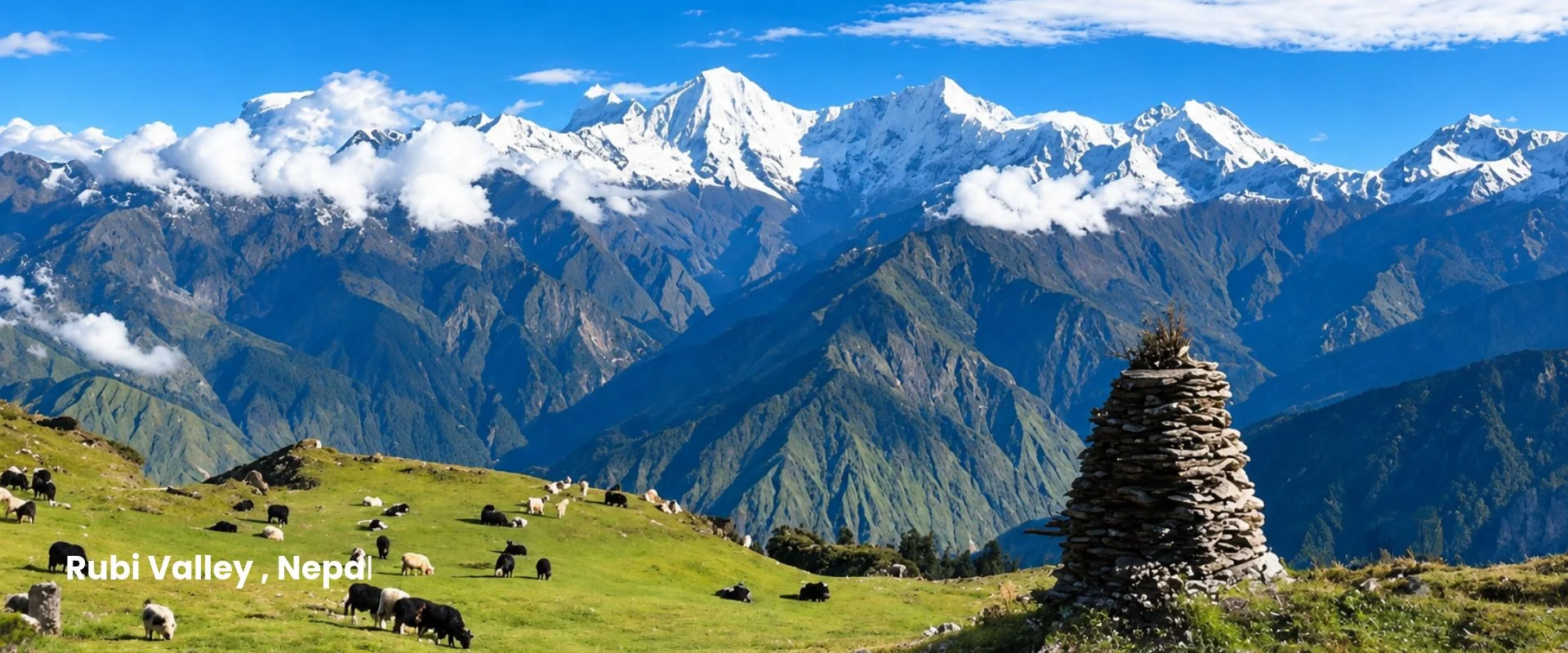
Ruby Valley is a remote trekking region in the Ganesh Himal area of Nepal, between Langtang National Park and the Manaslu region. The trail links Tamang, Gurung and Ghale villages, crosses the Pangsang La pass and gives wide views of the Ganesh Himal, Langtang and Manaslu ranges. It sees far fewer trekkers than Langtang or Annapurna, so it suits walkers who want village life, forest trails and a quieter route.
The valley takes its name from the minerals once mined here, including ruby, crystal and zinc. This guide covers the route, highlights, best time, a sample itinerary, permits and practical tips. Ghumnajaau can arrange the trek with a local guide.
| Detail | Rubi Valley |
|---|---|
| Region | Ganesh Himal, Dhading district, between Langtang and Manaslu |
| Duration | 7 to 10 days (a longer circuit of about 12 days is also run) |
| Start and end | Syabrubesi to Dhading Besi |
| Highest point | Pangsang La, about 3,850m |
| Highest point | Moderate to challenging |
| Accommodation | Teahouses, homestays and community lodges |
| Best seasons | September to November and March to May |
Drive from Kathmandu to Dhading Besi and Borang village (usually 4 to 5 hours), start the trek there and finish at Syabrubesi. The trek can also be done in reverse, from Syabrubesi to Borang village in Dhading. Another route connects by trek to Ganesh Himal Base Camp and the Manaslu region.
Stage names and timings vary between operators. A 10 to 12 day circuit adds rest days, side trips to the lakes and a slower pace over the pass.
| Permits/Cost | Foreigners | SAARC nationals | Notes |
|---|---|---|---|
| Langtang National Park permit | NPR. 3,000 | NPR. 1,500 | Required for the trek |
| TIMS card | NPR. 2,000 | NPR. 1,000 | Required for the trek |
| MCA permit (add-on) | NPR. 3,000 | NPR. 1,000 | Needed if the trek extends on the other route into the Manaslu and Ganesh Himal region |
| Guide | Varies | Varies | Strongly recommended, since trails are less marked and facilities are limited |
Verify all fees with the Nepal Tourism Board or the Department of Immigration before publishing.
The trek is remote, with rugged trails, steep sections and one long pass-crossing day, so it is rated moderate to challenging. Altitude is moderate, with the highest point around 3,850m, but altitude sickness is still possible. Ascend gradually, drink plenty of water and descend if symptoms worsen.
Expect basic teahouses, homestays and community lodges. Rooms are simple and sometimes shared. Dal bhat is the staple, with millet and buckwheat dishes in the villages and Tibetan bread, thukpa and momos on the early sections.
Tamang, Gurung and Ghale communities live along the route. Tibetan Buddhist traditions are strong, with monasteries, prayer flags, mani walls and festivals such as Lhosar. Community homestays let visitors share meals and village routines.
Ruby Valley starts from Syabrubesi, the same trailhead as Langtang Valley, so the two combine well. A common plan is Langtang Valley (7 to 8 days) followed by Ruby Valley (7 to 9 days), about 15 to 17 days in total. See the Langtang Region page for details.
Plan your Ruby Valley trek with Ghumnajaau.

We create unforgettable trips, customized for your group.