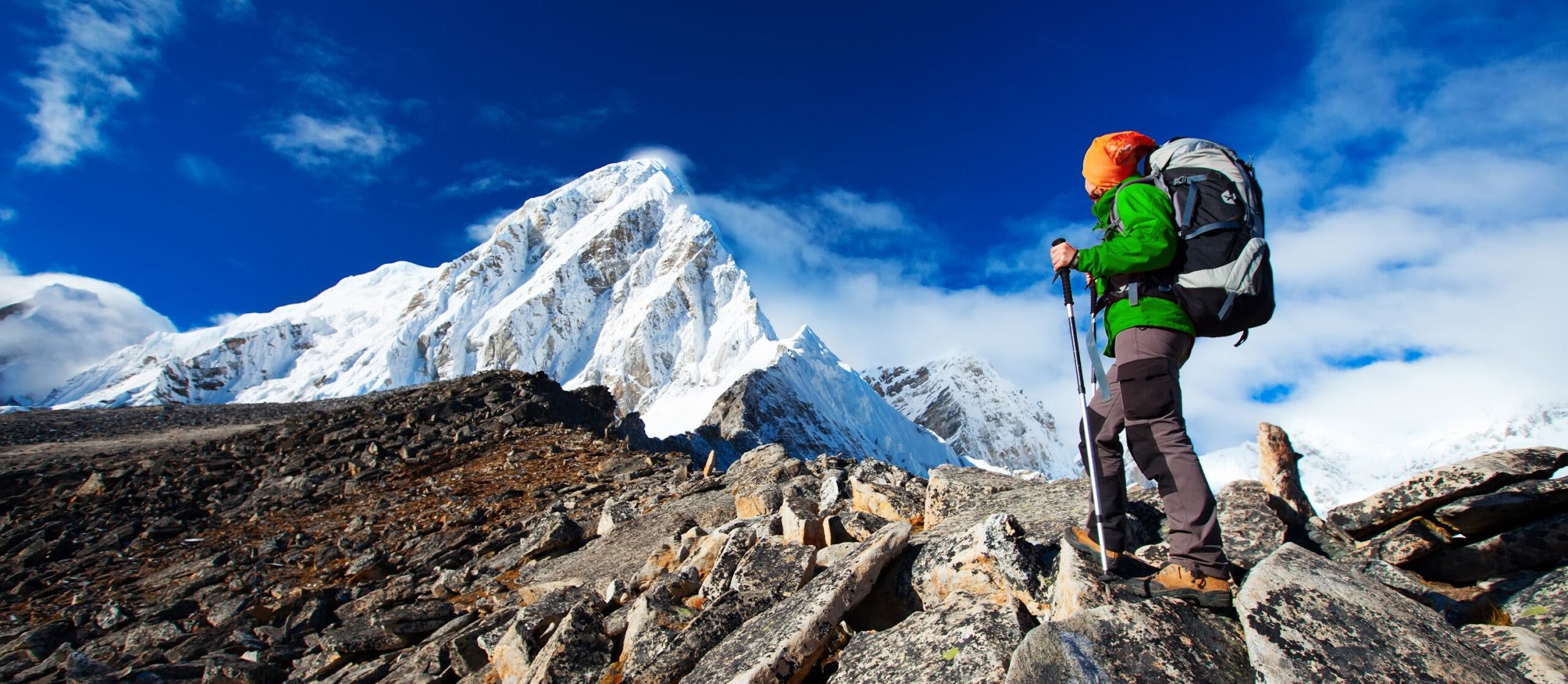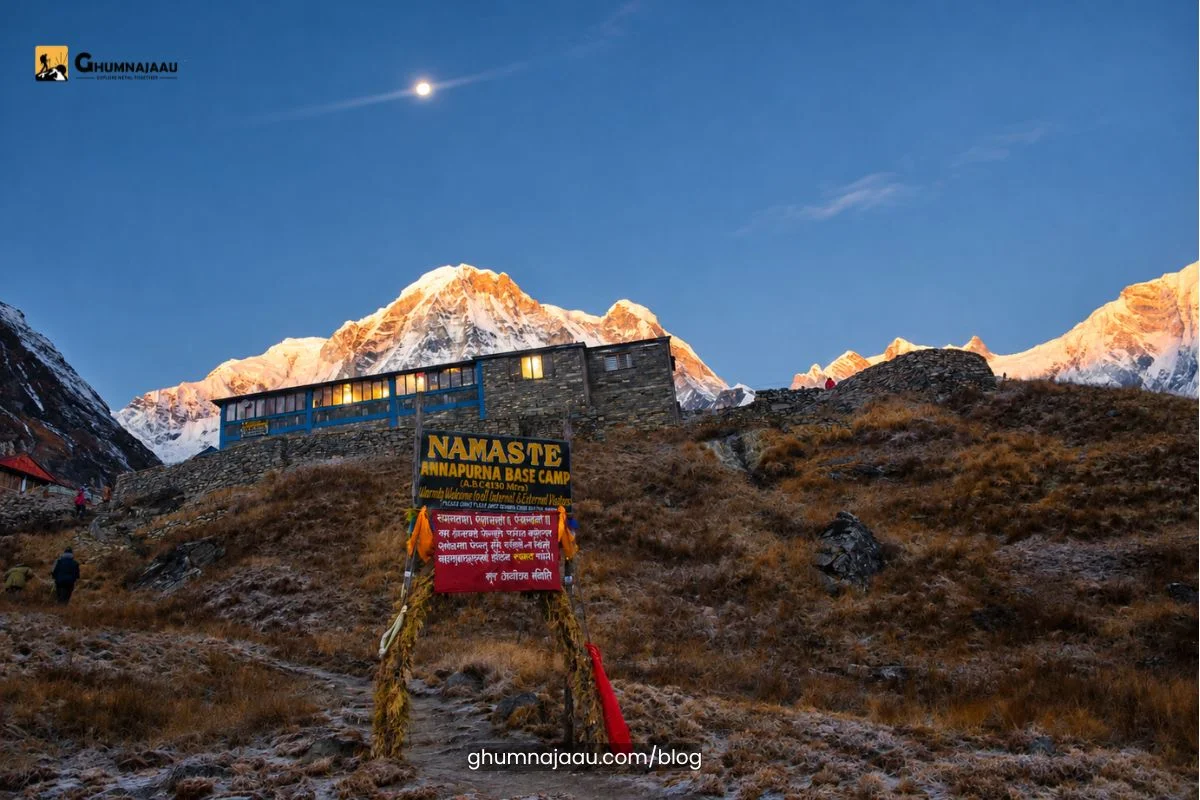
Nepal is a landlocked country in South Asia, bordered by China to the north and India to the east, south and west. Despite its relatively small size, its dramatic elevation changes create an extraordinary variety of landscapes and ecosystems.
|
Travel information |
Details |
|
Official name |
Federal Democratic Republic of Nepal |
|
Capital city |
Kathmandu |
|
Region |
South Asia |
|
Official language |
Nepali |
|
Currency |
Nepalese rupee (NPR) |
|
Time zone |
Nepal Standard Time (UTC+5:45) |
|
Highest mountain |
Mount Everest, 8,848.86 metres |
|
Geography |
Himalayas, hills and Terai plains |
|
Main religions |
Hinduism and Buddhism, alongside other faiths |
|
Main tourism experiences |
Culture, trekking, wildlife, adventure and pilgrimage |
|
Major international gateway |
Tribhuvan International Airport, Kathmandu |
Nepal's landscapes are commonly divided into three broad geographical regions: the Himalayas, the mid-hills and the Terai plains. Each region offers different scenery, climates, communities and travel experiences.
According to the Government of Nepal's Nepal Tourism Statistics 2025, the country received 1,162,365 international tourist arrivals in 2025. This illustrates Nepal's continued importance as a destination for cultural tourism, Himalayan trekking and adventure travel.
Related guide: Nepal Geography, Climate and Travel Facts