Major Festivals of Nepal: Calendar, Traditions and How to Visit

Major Festivals of Nepal: Calendar, Traditions and How to Visit
Nov 9, 2026 Nir Saru
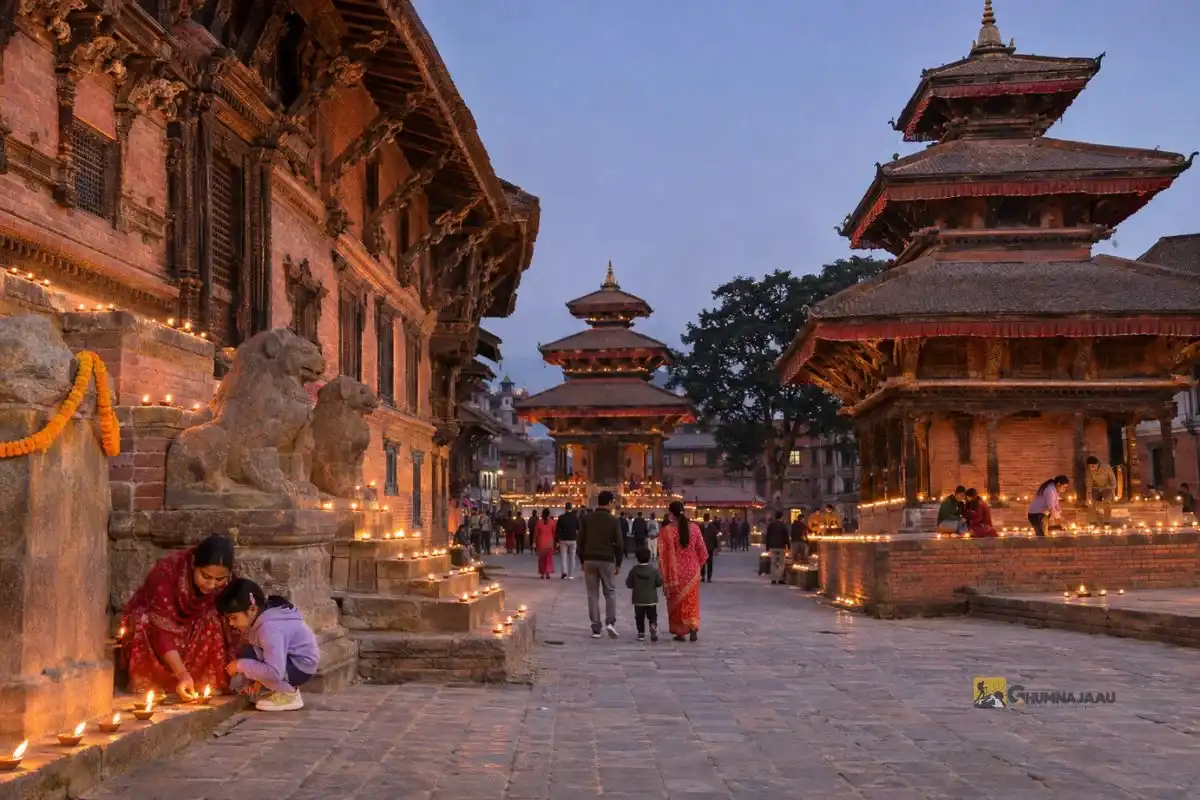
Marigold garlands hang over doorways during Tihar. Chariots roll through Kathmandu’s old streets during Indra Jatra. Families gather for blessings at Dashain. Nepal’s festivals show you the country through its living traditions, shared food, music and sacred places.

Each festival belongs to particular communities, places and calendars. Some welcome visitors to public celebrations. Others are private family rituals. This guide covers Nepal’s major festivals, when they happen, where to experience them and how to be a respectful guest.

New to Nepal? Start with our Nepal Travel Guide for the wider essentials.

Nepal Festival Calendar: When Each Festival Happens

Most Nepali festivals follow the lunar calendar, so their dates on the Gregorian calendar change every year. Use the table to plan the season, then confirm exact dates and local programmes before you book.

Festival

Usual season

Confirmed dates

Best places

Maghe Sankranti

Mid-January

1 Magh (14 or 15 January)

Chitwan, Devghat, Tharu villages

Lhosar (Tamu, Sonam, Gyalpo)

December to March, by community

Varies by community

Kathmandu, Boudhanath, Himalayan villages

Maha Shivaratri

February or March

Confirm each year

Pashupatinath, Kathmandu

Holi (Fagu Purnima)

March

Hills a day before the Terai

Kathmandu, Pokhara

Nepali New Year and Bisket Jatra

April

14 April 2027

Bhaktapur

Buddha Jayanti

April or May

Full moon of Baisakh

Lumbini, Boudhanath, Swayambhunath

Janai Purnima and Gai Jatra

August

Full moon, then the next day

Kathmandu Valley, Patan, Bhaktapur

Haritalika Teej

August or September

Confirm each year

Pashupatinath, Kathmandu

Indra Jatra

September

Confirm each year (several days)

Kathmandu Durbar Square

Dashain

Late September to October

2026: Vijaya Dashami 21 October. 2027: Vijaya Dashami 10 October

Across Nepal

Tihar

Late October to November

2026: 7–11 November (Laxmi Puja 8 Nov, Bhai Tika 11 Nov). 2027: Laxmi Puja 29 October, Bhai Tika 31 October

Kathmandu Valley, Pokhara, nationwide

Chhath

About a week after Tihar

2026: evening of 15 November, dawn worship next morning

Janakpur, Terai towns

Dates come from the Nepal government public-holiday notice for 2083 BS and published Nepali calendars. Holi is observed on a different day in the Terai. Individual processions and rituals can fall on different days from the main festival date, so always check the local programme.

Related blog: Best Time to Visit Nepal: Month-by-Month Guide
Winter Festivals (December to February)

Maghe Sankranti: The Start of Warmer Days

Maghe Sankranti marks the first day of the month of Magh and the sun’s move towards longer, warmer days. It is celebrated across Nepal, and it is especially important to Tharu communities, who call it Maghi, and to many Magar communities.

Families share sesame sweets (tilko laddu), ghee, molasses and sweet potato. Many people bathe at sacred river confluences. In the Tharu villages around Chitwan and Bardia, the festival comes with community dances and feasts.

Travel experience: Pair Maghe Sankranti with a Tharu village visit near Chitwan or Bardia.

Planning tip: Ask your guide which village or community event is open to visitors. Private family meals need an invitation.

Lhosar: Different Communities, Different New Years

Nepal does not have one Lhosar. Tamu Lhosar belongs to Gurung communities, Sonam Lhosar to Tamang communities, and Gyalpo Lhosar to Sherpa and other Himalayan Buddhist communities. Each has its own date, food and rituals.

Travel experience: Look for community cultural programmes, permitted monastery visits or a hosted celebration. Boudhanath in Kathmandu is a popular place to see prayers and gatherings.

Planning tip: Choose the community and place first, then confirm the date. A “Lhosar tour” should tell you which celebration you will see and how you can take part.

Maha Shivaratri: The Great Night of Shiva

Maha Shivaratri is one of the largest gatherings at Pashupatinath Temple. Devotees, including sadhus (holy men) from across Nepal and India, come to worship Shiva, keep night vigils and light fires.

Travel experience: Non-Hindu visitors cannot enter the main temple, but you can watch the atmosphere from the opposite bank of the Bagmati River with a guide.

Planning tip: Expect heavy crowds and security checks. Go with a guide, keep valuables to a minimum and respect restricted areas.

Spring Festivals (March to May)

Holi: Nepal’s Festival of Colours

Holi, also called Fagu Purnima, celebrates spring, colour and the victory of devotion over wrongdoing, as told in the story of Prahlad and Holika. In Kathmandu and the hills, it falls a day earlier than in the Terai.

Public celebrations can be lively and fun, but taking part should always be by consent.

Travel experience: Join a guided celebration or a managed event where you feel comfortable with the crowd.

Planning tip: Ask before applying colour to anyone. Wear clothes you do not mind staining, protect your eyes, phone, and camera, and avoid people who are working or worshipping.

Pokhara Travel Guide

Nepali New Year and Bisket Jatra: Bhaktapur’s Chariot Festival

Bisket Jatra takes place in Bhaktapur around the Nepali New Year, which falls on 1 Baisakh (14 April). Its best-known events are chariot processions, a tug-of-war between neighbourhoods, and the raising of a ceremonial pole.

Travel experience: Combine a guided heritage walk through Bhaktapur’s squares with a confirmed procession.

Planning tip: Chariots, ropes and crowds need space. Follow local directions and stand well away from moving equipment. Events run over several days, so confirm the programme rather than relying on New Year’s Day alone.

Buddha Jayanti: Reflection and Buddhist Heritage

Buddha Jayanti marks the Buddha’s birth, enlightenment and passing in the Buddhist tradition. It falls on the full moon of Baisakh. Lumbini, the Buddha’s birthplace, is the natural destination for a pilgrimage-style visit. Boudhanath and Swayambhunath suit a shorter cultural itinerary in Kathmandu.

Travel experience: Observe prayers, visit monasteries where access is allowed, and learn about Buddhist traditions with a knowledgeable guide.

Planning tip: Dress modestly, keep your voice low, and ask before photographing worshippers.

Monsoon Festivals (August and September)

Janai Purnima and Gai Jatra: Sacred Threads and Remembrance

On Janai Purnima, many Hindu men change their sacred thread (janai), and people tie protective threads on wrists. In the Kathmandu Valley, families eat kwati, a soup of mixed sprouted beans. Pilgrims also walk to Gosaikunda, which is only for prepared trekkers.

The next day is Gai Jatra, when families remember relatives who died in the past year. Processions include costumes, satire and humour, but remembrance is the heart of the festival.

Travel experience: Watch Gai Jatra processions in Kathmandu, Patan or Bhaktapur, and learn how traditions differ between neighbourhoods.

Planning tip: Photograph with care. Ask before taking close portraits, and do not treat grieving families as performers.

Haritalika Teej: Devotion, Dance and Fasting

Teej is celebrated by many Hindu women, who wear red, sing, dance and fast in devotion to Shiva and Parvati. Pashupatinath is a major gathering place.

Travel experience: Watch public celebrations and learn about the festival from a guide or a host who has invited you.

Planning tip: Expect crowds near major temples. Public celebrations do not mean every sacred space is open to visitors.

Indra Jatra: Kathmandu’s Living Heritage

Indra Jatra fills Kathmandu’s historic centre with masked dances, chariot processions and rituals connected to the Kumari, the living goddess. Celebrations last several days and are centred on Kathmandu Durbar Square.

Travel experience: Explore the old city with a cultural guide who can explain each ceremony and where to stand.

Planning tip: The main festival date does not cover every procession. Keep your schedule flexible. Photography may be restricted around the Kumari and some rituals, so follow the signs and instructions on site.

Related blog: Kathmandu Valley Travel Guide

Autumn Festivals (October and November)

Dashain: Family Reunions and Blessings

Dashain is Nepal’s biggest Hindu festival. It honours Goddess Durga and the victory of good over evil, and it lasts about two weeks, from Ghatasthapana to the full moon. On Vijaya Dashami, elders place tika and jamara (sacred barley shoots) on the foreheads of younger family members. Kite flying and village swings are part of the season in many places.

Travel experience: Visit festival markets, learn what tika and jamara mean, or join a family celebration if a host has invited you.

Planning tip: Millions of people travel home for Dashain. Book buses and flights early, and expect many offices, banks and some restaurants to close around the main days. Some worship includes animal sacrifice, so discuss your preferences before visiting ritual sites.

Tihar: Lamps, Flowers and Shared Celebration

Tihar is the five-day festival of lights. Each day has its own focus: crows (Kaag Tihar), dogs (Kukur Tihar), cows and Goddess Laxmi (Gai Tihar and Laxmi Puja), oxen (Goru Tihar), and finally brothers and sisters on Bhai Tika. In the evenings, children and young people go door to door singing Deusi-Bhailo.

For Newar communities, Mha Puja and the Nepal Sambat New Year fall during Tihar. In 2026, they are on 10 November.

Pokhara Travel Guide

Travel experience: Take an evening walk through lamp-lit neighbourhoods, visit flower markets and listen to public Deusi-Bhailo performances. Ask before photographing household rituals, and do not step on the rangoli designs at doorways.

Planning tip: Stay close to the neighbourhood you want to explore and arrange your return transport before you go out after dark.

Chhath: Worship at Sunset and Sunrise

Chhath honours the Sun and is especially important in the Terai. Devotees stand in rivers and ponds to offer prayers to the setting sun in the evening and the rising sun at dawn. Janakpur is the best-known destination, with Mithila culture and religious heritage in one place.

Travel experience: Watch evening worship from a public ghat, then return at dawn for the final rituals if local arrangements allow.

Planning tip: Keep paths clear, do not touch offerings and do not enter worship areas without permission. Ask before using flash or taking close photos of people.

For Trekkers: Mani Rimdu in the Everest Region

If your trip includes the Everest region, ask us about Mani Rimdu, a Sherpa Buddhist festival with masked dances held at monasteries such as Tengboche, usually in October or November. It follows the Tibetan lunar calendar, so confirm dates each year and allow extra days for flights and acclimatisation.

Trekking in Nepal

Which Nepal Festival Suits You?

If you enjoy

Consider

Evening lights and neighbourhood atmosphere

Tihar

Lively, participatory public celebrations

Holi

Historic cities and chariot traditions

Indra Jatra or Bisket Jatra

Buddhist heritage and quiet reflection

Buddha Jayanti

Family traditions and blessings

Dashain, with a host who invites you

Mithila culture and waterside worship

Chhath in Janakpur

Pilgrim atmosphere and sadhus

Maha Shivaratri

Community traditions and remembrance

Gai Jatra

Himalayan culture and monasteries

A confirmed Lhosar programme or Mani Rimdu

Your experience depends on the place, the local programme and the access available on the day.

Related blog: Nepal Sightseeing & Cultural Tours 

How Festivals Affect Your Travel in Nepal

Festival travel works best with some flexibility.

  • Book transport early. Buses, domestic flights and tourist vehicles fill up around Dashain and Tihar.
  • Check opening hours. Museums, banks, offices and some restaurants may close or run shorter hours.
  • Allow time around processions. Road closures and crowds can change your transfers and sightseeing plans.
  • Confirm what is included. Ask whether you will observe in public, join a guided walk, attend a ticketed programme or visit a host family. Family visits need prior agreement.
  • Think about the season. A festival date does not guarantee clear mountain views or good trekking weather. Our Best Time to Visit Nepal guide shows what to expect month by month.

For costs and practical details, see our Nepal Travel Tips and Nepal trip cost guides.

Festival Etiquette: How to Be a Respectful Guest
  • Ask before photographing people, rituals or private spaces.
  • Follow local dress expectations, and remove your shoes where required.
  • Keep processional routes, temple entrances and offering areas clear.
  • Ask before joining a dance, applying colour or taking part in a ceremony.
  • Respect restrictions around sacred objects and religious figures.
  • Use local guides, artisans and businesses where you can.
  • Accept that some ceremonies are private and not open to visitors.

A polite question and a little patience usually lead to a better experience than trying to see every ritual.

Experience Nepal’s Festivals with Ghumnajaau

Build your journey around the traditions that interest you, from Kathmandu’s historic processions to Tihar’s lamp-lit neighbourhoods or Chhath worship in Janakpur.

Share your travel dates, group size and interests with Ghumnajaau, and we will suggest a cultural itinerary with local guides and respectful festival experiences. Customise your Nepal trip

Frequently Asked Questions

Dashain and Tihar are the most widely celebrated. Holi, Buddha Jayanti, Maha Shivaratri, Teej, Indra Jatra, Chhath and community New Year festivals such as Lhosar are also important. Their significance varies between communities.

Yes. Most follow the lunar calendar. Check the dates for the year you plan to travel, and confirm local programmes separately.

Visitors can usually watch public celebrations and may be invited to take part. Private rituals and some temples have restrictions, so ask your guide first.

It is a good time to learn about family traditions, and autumn weather is generally clear. However, transport is busy and some services close, so plan early, especially if you travel beyond the main tourist areas.

Yes. Leave buffer days around the festival and confirm transfers before you finalise the trek. Mountain festivals need extra planning for altitude, access and monastery schedules. See our Trekking in Nepal guide.

Tihar suits travellers who enjoy evening walks and neighbourhood atmosphere. Indra Jatra suits those interested in Kathmandu’s heritage, and Buddha Jayanti suits a quieter, more reflective trip.

Plan Your Trip with Ghumnajaau

This data will only be used by our team to contact you and no other purpose.