Traditional Nepali Food: Dishes to Try, Dining Tips and Where to Find Them

Traditional Nepali Food: Dishes to Try, Dining Tips and Where to Find Them
Nov 16, 2026 Ghumnajaau Team
A steaming plate of momo, a freshly served dal bhat set or a warm yomai can become one of the best memories of your trip. Food connects you to everyday life, family traditions, and the communities you meet along the way.

Nepali cooking changes with geography, season and community. This guide covers the dishes worth trying, what to expect when you order, how to eat with dietary needs and where to build food experiences into your journey.

New to Nepal? Start with our Nepal Travel Guide for the wider essentials.

What Is Traditional Nepali Food?

There is no single “Nepali cuisine”. The country has many regional and community food traditions. Rice, lentils, seasonal vegetables, grains, pickles and meat appear in different combinations, and recipes change from one household to the next.

Four traditions are the easiest to explore as a visitor:

  • Newar food in the Kathmandu Valley, with festival dishes, snacks and sweets.
  • Thakali meals from the Thak Khola valley in the Annapurna region, now served in Pokhara, Kathmandu and along the trails.
  • Himalayan food such as thukpa and thenthuk (noodle soups) in Sherpa, Tibetan and mountain communities.
  • Tharu food in the Terai, around Chitwan and Bardia.

Instead of looking for one meal that stands for all of Nepal, try a few local specialities as you travel.
Nepali Dishes to Try: A Quick Guide

Dish

What to expect

Good for

Dal bhat

Rice, lentil soup, vegetable curry and pickle

A complete everyday meal

Momo

Filled dumplings with a spicy tomato or sesame sauce

A snack or light meal

Thakali set

Rice or dhido with lentils, vegetables, pickles and optional meat

A regional meal tradition

Dhido

Thick porridge-like dish made from cooked grain flour

An alternative to rice

Gundruk

Tangy fermented leafy greens

Soups and side dishes

Samay baji

Newar platter built around beaten rice

Sampling many foods at once

Bara (wo)

Savoury lentil patty cooked on a griddle

A warm snack

Chatamari

Thin rice-flour crepe with optional toppings

A light meal

Yomari

Steamed rice-flour dumpling with a sweet filling

A traditional sweet

Sel roti

Ring-shaped fried rice bread

Breakfast or a snack

Juju dhau

Rich, sweet curd from Bhaktapur

Dessert

Thukpa

Noodle soup with vegetables or meat

A warming meal on cold days

Recipes, toppings and serving styles vary. Ask about ingredients instead of assuming a dish is vegetarian, vegan or safe for an allergy.

Dal Bhat: Start with an Everyday Nepali Meal

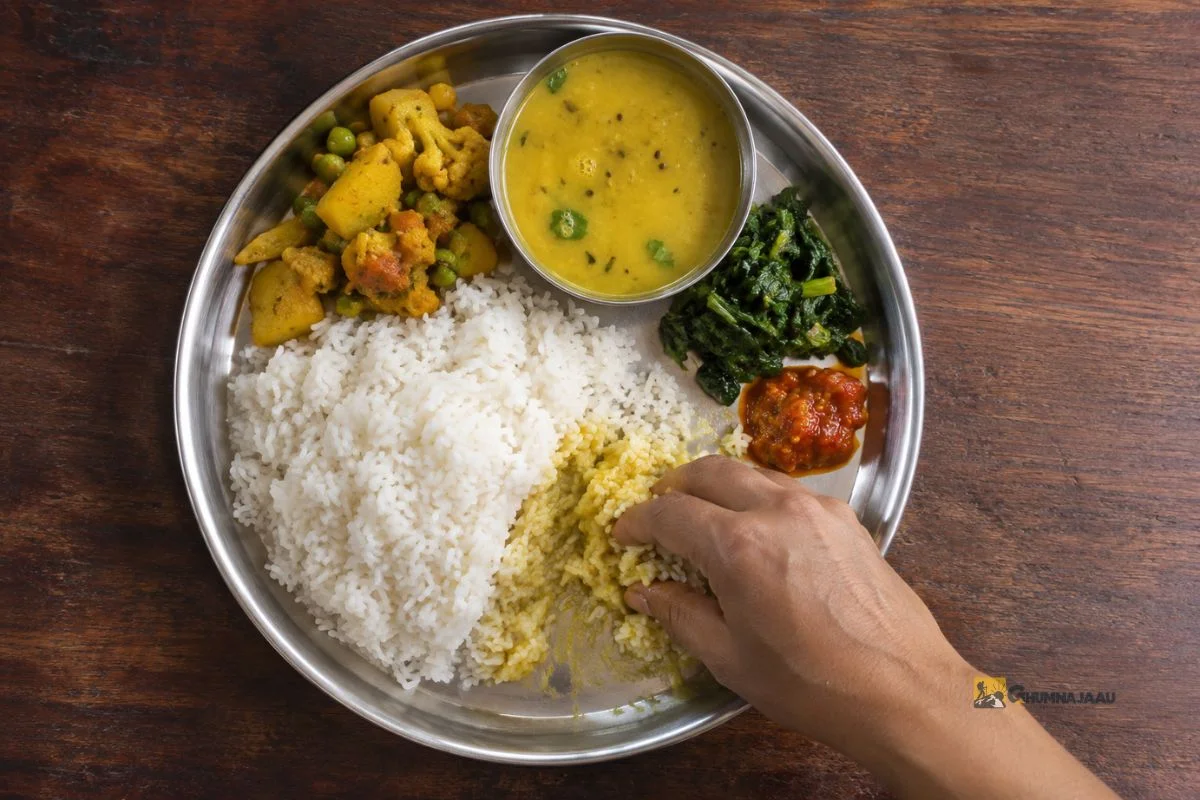
Dal bhat is dal (lentil soup) with bhat (cooked rice). Most plates also come with a vegetable curry (tarkari), a pickle (achar) and sometimes greens, papad or meat. Many Nepalis eat it twice a day.

It is a good first meal because you can taste each part on its own and then combine them. In many restaurants and trekking lodges, dal bhat comes with free refills of rice and dal, which is why trekkers like it.

Ordering tip: Ask whether the set includes meat or dairy and whether refills are included, as this varies by place.

Momo: Dumplings with Plenty of Variety

Momo are dumplings that came to Nepal through Tibetan and Newar food traditions and are now eaten everywhere. Fillings are usually vegetables, chicken or buffalo meat, and some kitchens offer cheese.

Steamed momo are the simplest start. You may also see fried momo, kothey (pan-fried on one side) and jhol momo, served in a spiced soup.

Ordering tip: “Buff” means buffalo meat. Ask for the chilli sauce on the side if you want a milder meal, and check whether vegetable momo contain cheese or butter.

Thakali Set: A Meal with Distinctive Sides

The Thakali people of the Thak Khola valley are known for their food and hospitality. A Thakali set brings rice or dhido together with lentils, seasonal vegetables, pickles, greens, and optional meat dishes. The pickles and sides are what make one kitchen’s meal different from another’s.

Travel experience: Make time for a slow lunch and ask your host to explain each side.

Ordering tip: If you avoid dairy, ask about ghee as well as yoghurt.

Visit Lower Mustang ( ThakalI Region)

Dhido and Gundruk: Grains and Fermented Greens

Dhido is made by stirring flour into boiling water until it becomes a thick, smooth mass, then eaten with lentils, curry or a soup. Buckwheat, millet and maize are common, though some kitchens use wheat flour.

Gundruk is made from fermented leafy greens, usually mustard or radish leaves. It appears in soups and as a sour side dish. You may also come across sinki, a similar fermented radish dish. Together they show a side of Nepali cooking that goes well beyond rice.

Ordering tip: Ask which flour the dhido uses. A grain-based dish is not automatically vegetarian or gluten-free.

Samay Baji: Newar Food on a Platter

Samay baji is a Newar platter served at feasts and festivals. It is built around baji (beaten rice) and can include spiced grilled meat (choila), black soybeans, egg, potato, ginger, pickles and greens.

It is far more than a restaurant plate. In Newar homes, it is part of celebrations and rituals, so ask your guide or host what it means.

Ordering tip: Confirm the contents before you order. A vegetarian version has to be requested.

Bara and Chatamari: Two Kathmandu Valley Favourites

Bara (also called wo) is a patty of ground black lentils cooked on a griddle. It can be plain or topped with egg or minced meat.

Chatamari is a thin rice-flour crepe with toppings such as minced meat, egg or vegetables. People often call it “Newari pizza”, but it has its own place in Newar cooking.

Travel experience: Try freshly made portions on a heritage walk through Patan or Bhaktapur, and leave room to sample more than one dish.

Yomari: A Sweet Steamed Dumpling

Yomari is a Newar rice-flour dumpling shaped like a fig, steamed and filled with sweet chaku (molasses) and sesame. Some versions use khuwa, a thickened milk. It is closely linked to Yomari Punhi, a Newar festival in the winter full moon, so it is easiest to find around that time.

Ordering tip: Ask which filling is available. The khuwa version contains milk.

See our guide to the major festivals of Nepal to plan your trip around festival foods.

Sel Roti: A Traditional Rice Bread

Sel roti is a lightly sweet, ring-shaped bread made from rice flour batter and fried until crisp outside and soft inside. It is made in large batches for Tihar and Dashain and is also sold as a snack or breakfast.

Try a fresh one with tea or the accompaniment your host suggests.

Ordering tip: Recipes can include ghee, milk or banana, so check if you need to avoid them.

Juju Dhau: Bhaktapur’s “King of Curd”

Juju dhau is a rich, sweet curd traditionally set and served in small clay pots. It is closely linked with Bhaktapur and is a natural dessert stop on a visit to the city’s squares.

Ordering tip: It contains dairy. Buy it from a busy seller with fresh stock that is kept cool.

Thukpa and Thenthuk: Warming Noodle Soups

Thukpa comes from Tibetan and Himalayan food traditions: noodles in a hot broth with vegetables, meat or egg. Thenthuk is a similar soup with hand-pulled noodle pieces. Both are common in mountain towns and trekking lodges.

Ordering tip: Ask what the broth is made from if you want a vegetarian bowl.

More to Try
  • Sekuwa: grilled, marinated meat, often served with beaten rice.
  • Sukuti: dried, spiced meat served as a snack.
  • Aloo achar: a tangy potato salad found in many local meals.
  • Chiya: milky, sweet, spiced Nepali tea. In the mountains you may also meet butter tea (suja).
  • Tongba: a warm fermented millet drink from eastern Nepal, served in a wooden or metal vessel.
Regional Foods to Look For

In Chitwan and other Tharu areas, ask about dhikri, a steamed rice-flour dish served with chutney, and, where available, local fish or river-snail dishes. In the hills and mountains, ask your guide or host what is seasonal and prepared locally. Availability depends on the season, ingredients, and notice, so ask in advance.

Where to Add Food Experiences to Your Trip

Place or setting

Suggested experience

Kathmandu and Patan

A heritage walk with Newar snack stops

Bhaktapur

Bara or chatamari, then juju dhau

Pokhara

A Thakali meal or a cooking class

Chitwan

A Tharu village meal arranged by a local host

A village homestay

A seasonal meal explained by your host

A trekking lodge

Ask what the kitchen prepares fresh that day

These are itinerary ideas, not guarantees. Confirm menus, dietary needs and any hosted activity before you book.

Explore further: Kathmandu Valley, Pokhara and Chitwan.

Eating on a Trek

Trekking lodge menus are simple and repeat from village to village: dal bhat, noodle soups, fried rice, momo, eggs, porridge and pancakes. Dal bhat is the most filling choice, and refills are often included. At higher altitudes, ingredients are carried up on foot or by animals, so menus are shorter and prices rise. Vegetarian meals are generally safer than meat on a trek, because meat is harder to keep fresh. Our Trekking in Nepal guide covers lodges, costs and daily routines.

Vegetarian, Vegan and Allergy-Aware Dining

Vegetarian travellers will find lentils, vegetable curries, potatoes, beans, greens and grain dishes almost everywhere. Vegan travellers should also ask about ghee, butter, milk, yoghurt and cheese.

Do not rely on a dish name alone. Broths, sauces, toppings and cooking fats may contain ingredients you avoid.

For food allergies or coeliac disease, explain both the ingredients you must avoid and the need to prevent cross-contact in the kitchen. Rice, millet or buckwheat does not make a finished dish gluten-free. Ask what the kitchen can safely do, and consider carrying allergy cards in Nepali and any medication you need. We can help you pass this information to restaurants and hosts when you travel with us.

Practical Dining Tips
  • Choose freshly cooked food served hot.
  • Drink bottled, filtered or purified water, and check what water is used for ice.
  • Wash your hands before eating, or use hand sanitiser.
  • Ask for chilli and achar on the side if you prefer mild food.
  • Explain dietary needs clearly, and check again when the meal arrives.
  • Check prices and any extra charges before you order.
  • Busy places with high turnover are usually a good sign, but ask your guide or hotel for advice if you are unsure.

For more on staying healthy and budgeting, see our Nepal Travel Tips.

Nepali Dining Etiquette

Wash your hands before a meal. If you eat with your hands, use your right hand. Asking for a spoon is perfectly acceptable.

In a home, follow your host’s lead on where to sit, how food is served and when to begin. Use serving spoons for shared dishes, and avoid touching shared food with a utensil or hand that you have already eaten from. In many homes, the idea of food that has been touched by another person’s plate or mouth (jutho) matters, so it is polite to avoid sharing bites from your own plate. Accept a second helping graciously, because refusing offers can be awkward.

Ask before photographing people, kitchens or food preparation. A polite question about a dish often leads to a better conversation than a quick photograph. See our guide to Nepali culture and etiquette for more.

Discover Nepal Through Its Food with Ghumnajaau

Leave room in your trip for a meal that tells you more about where you are. Try Newar dishes on a Kathmandu Valley walk, enjoy a Thakali lunch in Pokhara, or share a home-cooked meal with a local host.

Share your travel dates, interests, and dietary requirements with Ghumnajaau, and we will suggest food experiences that fit your itinerary. Plan your customized Nepal trip

Frequently Asked Questions

Start with a freshly cooked meal such as dal bhat or steamed momo. Ask for a mild version if you are unsure about chilli.

No. Chilli levels vary by dish and kitchen. Pickles and sauces are often hotter than the main meal, so ask for them on the side.

It means momo filled with buffalo meat.

Yes. There are many vegetable, lentil, bean and grain dishes. Confirm broths, toppings and cooking fats when you order.

Dal bhat is the rice-and-lentil base of a meal. A Thakali set is a regional version with its own pickles, sides, and, often, dhido.

Yes. A heritage walk can include food stops, and a cooking class or hosted meal can be arranged in advance. Confirm the activity, menu, and dietary arrangements before you book. Our sightseeing and cultural tours are a good starting point.

Many travellers enjoy it, but choose busy stalls with hot, freshly cooked food. If you have a sensitive stomach or are new to the country, start with restaurants and build up.

Plan Your Trip with Ghumnajaau

This data will only be used by our team to contact you and no other purpose.