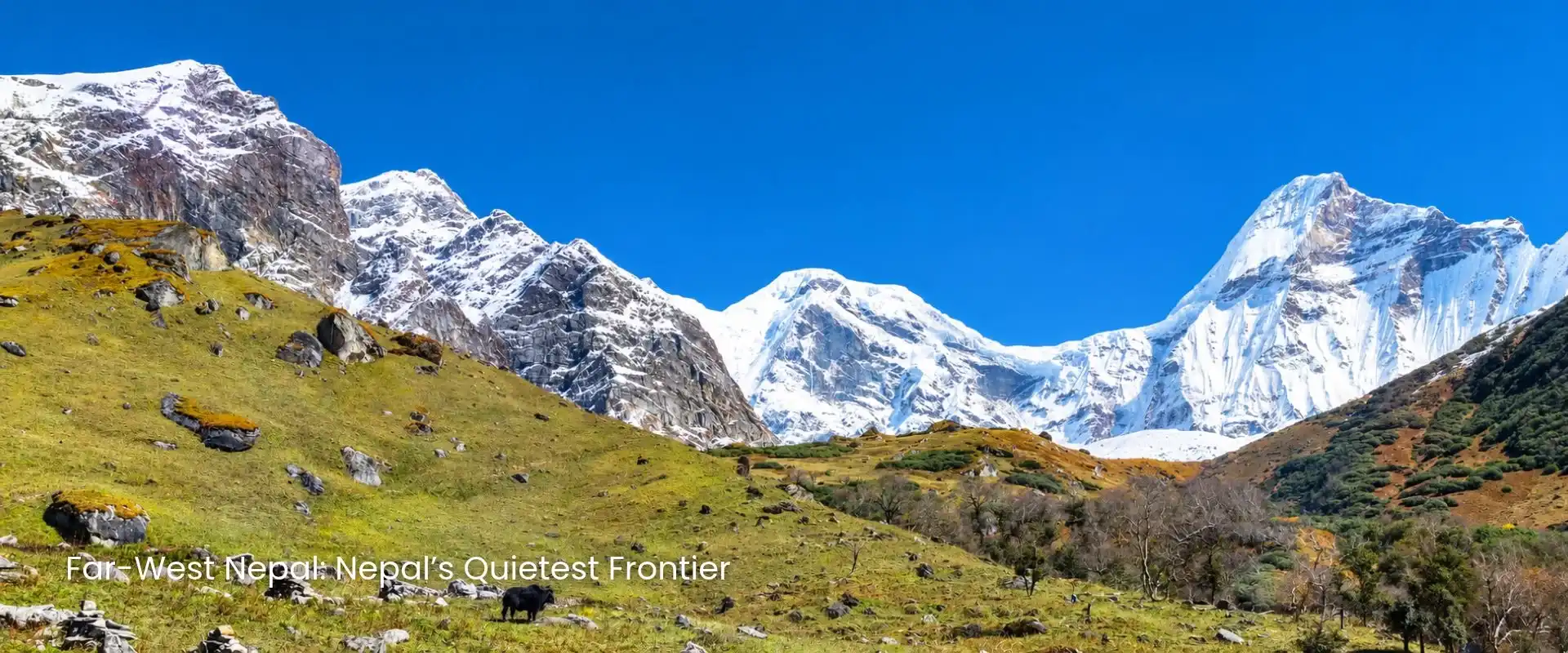
Far-West Nepal is the part of the country most travellers never see. There are no crowded trails and few tourist lodges. Instead you find high Himalayan peaks, sacred hill forests, quiet lakes and one of the best wildlife parks in the Terai, all within one province, Sudurpashchim.
This guide helps you choose what to visit, how to get there and when to go. Each destination also has its own detailed page.
| Region | Sudurpashchim Province (Darchula, Bajhang, Bajura, Doti, Achham, Kanchanpur and nearby districts) |
| Main gateways | Dhangadhi (Kailali) and Nepalgunj by air; Mahendranagar (Bhimdatta) by road |
| Best seasons | March–May and September–November (Shuklaphanta: November–April) |
| Trip style | Trekking, nature and pilgrimage, wildlife safari, village homestays |
| Facilities | Basic. Expect long drives, limited mobile networks and few ATMs |
1. Khaptad National Park is a high plateau of grassland and forest, home to the Khaptad Baba Ashram. It suits slow walking, nature and quiet.
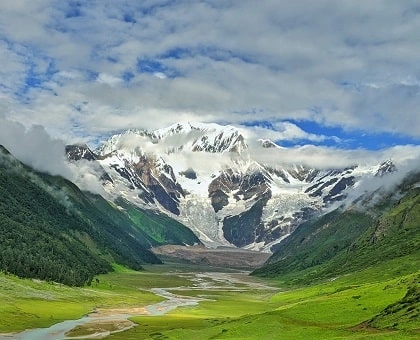
2. Api Nampa Conservation Area in Darchula is remote Himalaya beneath Api Himal (7,132 m). It is for experienced trekkers with good support.
3. Ramaroshan, Achham is a landscape of lakes, meadows and hills with village homestays. It suits gentle walks, photography and culture.
4. Shuklaphanta National Park in Kanchanpur is Terai grassland and wetland, famous for swamp deer, tigers and birds. It suits safari travellers.
Simikot, sometimes listed as a gateway, is in Humla and is not an access point for these four destinations.
| Season | What to expect |
|---|---|
| Autumn (Sep–Nov) | Clear skies and the best mountain views. Ideal for Khaptad, Ramaroshan and Api Nampa |
| Winter (Dec–Feb) | Cold hills with snow at altitude. Good for Shuklaphanta, difficult for high trekking |
| Spring (Mar–May) | Rhododendron blooms and pleasant trekking. Shuklaphanta gets hot but wildlife gathers near water |
| Monsoon (Jun–Sep) | Landslides, leeches and disrupted roads. Not recommended for hills; parts of Shuklaphanta become inaccessible |
This route links Shuklaphanta, Khaptad and Ramaroshan. Api Nampa is a separate trekking expedition and is best planned on its own.
| Day | Routine |
|---|---|
| Day 1 | Fly Kathmandu to Dhangadhi, drive to Mahendranagar |
| Day 2-3 | Shuklaphanta National Park: jeep safari, birdwatching, Rani Tal |
| Day 4 | Drive to Doti (Silgadhi or Dipayal) |
| Day 5-7 | Khaptad National Park: Khaptad Baba Ashram, Tribeni, Khaptad Daha |
| Day 8 | Travel to Achham (Mangalsen or Sanfebagar) |
| Day 9-10 | Ramaroshan: lakes, meadows, village homestay |
| Day 11 | Drive back to Dhangadhi |
| Day 12 | Fly to Kathmandu |
Timings depend on road conditions. We confirm the final plan before departure.
Permits are needed for Api Nampa Conservation Area, Khaptad National Park, Shuklaphanta National Park and Ramaroshan. Badimalika may also need a local entry or visitor registration. Fees and rules change, so Ghumnajaau confirms current requirements and arranges permits for you. Details are on each destination page.
Related Blog: Nepal Trekking Permits & Fees 2026–27: Complete Guide
Related blog: Nepal Travel Tips: Visa, Budget, Safety & Packing
Can I visit all four places in one trip?
Shuklaphanta, Khaptad and Ramaroshan fit into about 12 days. Api Nampa needs its own trek.
Is Far-West Nepal good for first-time visitors to Nepal?
It suits travellers who enjoy quiet, simple travel. If you want comfort and quick access, start with Pokhara or Chitwan.
What is the best month to go?
October and November for the hills, and November to March for Shuklaphanta.
Far-West Nepal rewards travellers who value silence, wilderness and real local life. Contact Ghumnajaau to design a safe, well-organised journey with the right guides, permits and transport.
We create unforgettable trips, customized for your group.